Small Comforts, Big Thought: 100 Cutlery Sets for Worthing’s Cancer Treatment Packs
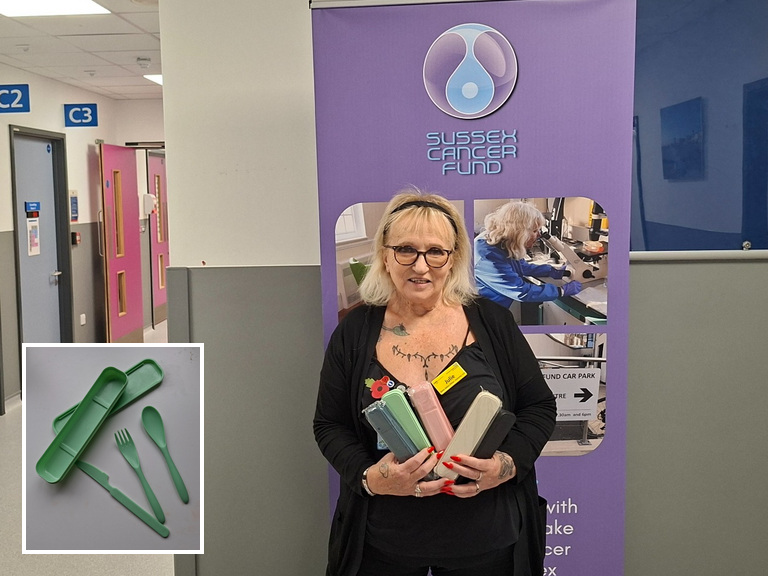
Sussex Cancer Fund has bought 100 sets of plastic travel cutlery for the cancer support team at Worthing Hospital, part of University Hospitals Sussex NHS Foundation Trust. Each set contains a knife, fork and spoon in a compact travel case and will be available to include in patient packs given out by the Macmillan Information Hub at the Amberley Suite.
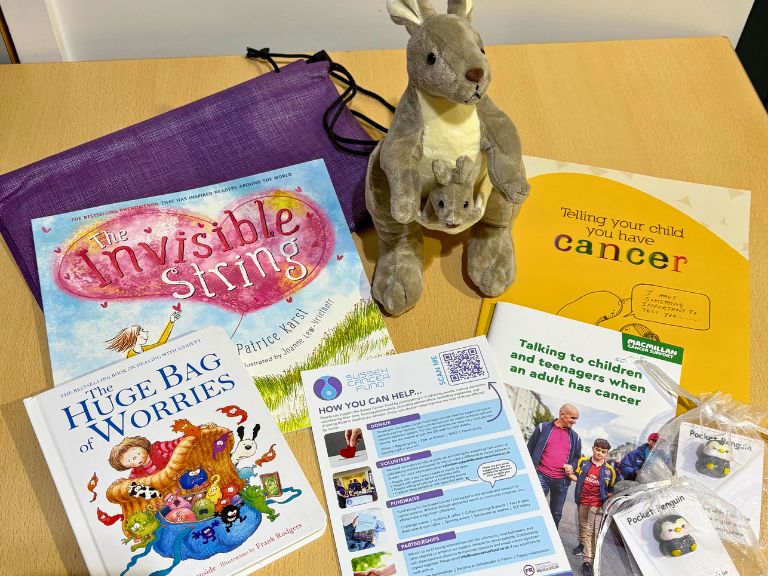
The packs are put together by Miranda Jose, Macmillan Information & Support Service Manager, and her team. They bring together practical items and information to offer some comfort and support when someone is starting cancer treatment. The contents vary according to what each person might find useful and what the team has available. Sussex Cancer Fund helps provide items for the packs whenever we can.
Why plastic cutlery can help
Some cancer treatments, including chemotherapy, can change how food and drink taste. For some people, this means a metallic taste that can make even familiar foods less appealing. Macmillan Cancer Support suggests trying plastic cutlery if this happens. It’s a simple change that may make meals and snacks more enjoyable.
Having a personal set is handy on hospital days, too. It slips into a bag, keeps all three utensils together and means there’s a spoon or fork to hand for a yoghurt, a packed lunch or a snack brought from home. Patients can use the set at home as well, whenever they find plastic cutlery more comfortable to eat with.
Suggested quote from Miranda Jose, for approval
“When someone is starting treatment, there’s often a lot to take in. We put these packs together with things people can use straight away, alongside information they can come back to in their own time. A set of plastic cutlery is a good example. If food starts to taste metallic, it gives someone something simple to try at their next meal. We’re grateful to Sussex Cancer Fund for helping us include these sets in our packs.”
Thank you to our supporters for helping us fund practical items like these, and to Miranda and her team for putting so much thought into what might make the first few weeks of treatment a little easier.